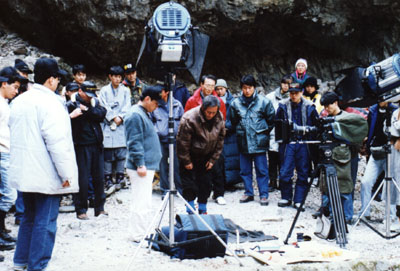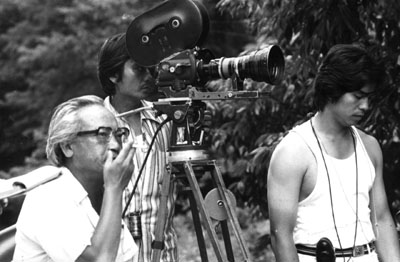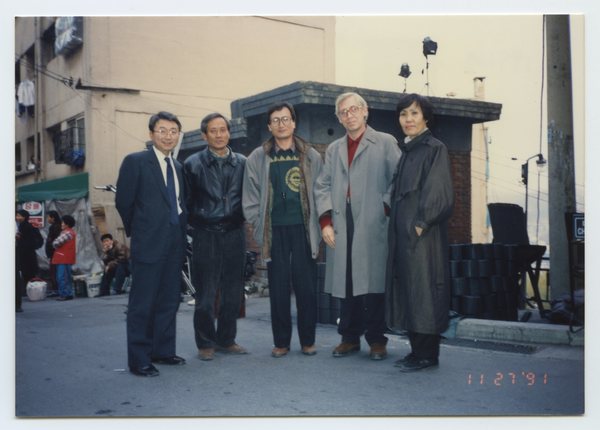
Born in 1935, YOU Young-gil was among the first wave of students at Inha University in Incheon upon its establishment in 1956. While he was looking to gather enough money for the tuition fee of his second semester, YOU suddenly found himself tutoring the children of a film director, YANG Joo-nam, best known for the 1958 drama <The Bell Tower>. The director invited him one day to visit him on the set for his next film, <Exorcism Of Bae-Baeng-Yi> (1957). YOU, enthra...
More
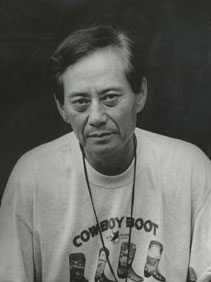
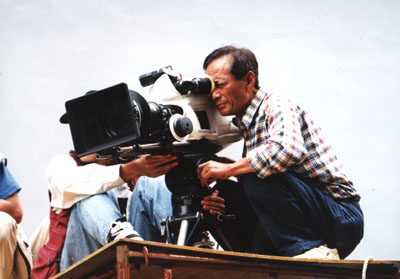
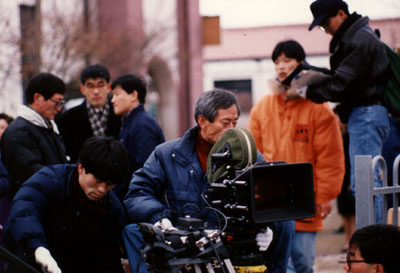
Born in 1935, YOU Young-gil was among the first wave of students at Inha University in Incheon upon its establishment in 1956. While he was looking to gather enough money for the tuition fee of his second semester, YOU suddenly found himself tutoring the children of a film director, YANG Joo-nam, best known for the 1958 drama <The Bell Tower>. The director invited him one day to visit him on the set for his next film, <Exorcism Of Bae-Baeng-Yi> (1957). YOU, enthralled by this first experience, decided on the spot to cancel his college registration so he could start working as a camera assistant. However, the 1961 military coup led to YOU being drafted, having avoided conscription until then, and so had to put his film career on hold. After his leave, he opened an iron foundry with his brother, but the enterprise was short-lived, and he eventually went back to the film studios when he was hired by director of photography JANG Seok-jun as his assistant on <A Regret> (1967), a film by YU Hyun-mok. Following that, he was promoted director of photography for another YU Hyun-mok title, <I Want to Be Human> (1969), and later worked on CHOI Ha-won’s classic <An Old Potter> (1969). His meeting with avant-gardist director HA Gil-jong, with whom he made <The Pollen Of Flowers> (1972), allowed him to become a frequent collaborator of the filmmakers of the Visual Era collective, which was inspired by similar movements in Europe and America. A photo reporter for the US television network CBS from 1975 onwards, YOU was among the rare few Korean journalists to film several of the most infamous conflicts of that period, such as the worker’s union protests and the Gwangju democratization movement and its severe repression by the regime. YOU still managed to find time to work on a large number of movies. In 1979, YOU won Best Photography at the Grand Bell Awards for his work on YU Hyun-mok’s <Rainy Days> (1979). He had a particularly strong influence on the Korean New Wave (late 1980s to the 1990s) with his numerous collaborations with the preeminent directors of the movement, most notably BAE Chang-ho (<Our Joyful Young Days>, 1987), PARK Kwang-su (<Chil-Su And Man-Su>, 1988; <A Single Spark>, 1995), LEE Myung-se (<Gagman>, 1988; <My Love, My Bride>, 1990), CHUNG Ji-young (<North Korean Partisan In South Korea>, 1990; <White Badge>, 1992), and JANG Sun-woo (<The Road To Race Track>, 1991; <A Petal>, 1996). After filming LEE Chang-dong’s debut <Green Fish> (1997), he worked on one last project, <Christmas in August> by HUR Jin-ho, which won Best Cinematography from the Korean Film Critic Association and the Blue Dragon Film Awards. YOU Young-gil passed away from a brain hemorrhage in 1998.
Less